Course Content
Session One: Course Overview
You will spend the first part of the day getting to know participants and discussing what will take place during the workshop. Students will also have an opportunity to identify their personal learning objectives.
0/2
Session Two: Defining Onboarding
To start, participants will explore what onboarding is (and is not) and how it differs from orientation. Participants will also identify some of the business benefits of a successful onboarding program. To conclude the session, participants will discuss some factors for success and some issues that can lead to failure.
0/5
Session Three: Creating the Onboarding Steering Team
This session will look at who should make up the team that will steer the onboarding program and what their role should be.
0/2
Session Four: Gathering Supporting Information
Next, participants will learn what key processes, programs and stakeholders should be included in the onboarding development process. Participants will also receive a list of questions that they can use to shape the program’s vision. Then, participants will practice creating a vision for a fictional company.
0/5
Session Five: Setting Goals
In this session, participants will learn the six elements of a good goal, summarized by the SPIRIT acronym.
0/1
Session Six: Developing the Framework
To begin the second day, participants will create a full onboarding program outline for their fictional company.
0/4
Session Seven: Creating an Onboarding Plan
To conclude the first day, participants will work on a personal onboarding plan for a fictional case study.
0/2
Session Eight: Customizing the Framework
0/1
Session Nine: Measuring Results
0/1
Session Eleven: Onboarding Executives
0/1
Session Twelve: Understanding Employee Engagement
In this session participants will learn about the Gallup studies on engagement, and what they can do to make sure employees are checked in.
0/1
Session Thirteen: Ten Ways to Make Your Program Unique
A well-designed, unique program can be an ambassador for your company. This session will give participants some ideas for making their onboarding program stand out.
0/2
Session Fourteen: Fun and Games
Your onboarding program doesn’t have to be all work and no play, as long as employees are learning or building relationships while they are playing. In this session we’ll share some of our favorite onboarding and training games.
0/1
Session Fifteen: Case Study Analysis
To conclude the workshop, participants will review the case studies that they gathered for a pre-assignment and create a list of best practices.
0/2
Personal Action Plan
At the end of the workshop, students will have an opportunity to ask questions and fill out an action plan.
0/2
Onboarding: The Essential Rules for a Successful Onboarding Program
About Lesson

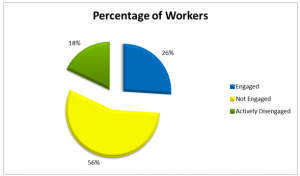
There’s a difference between being at work and really being there. The Gallup Management Journal places employees in one of three categories:

  • Engaged: These employees are passionate about work and feel connected to their company. These are the innovators; the movers and shakers.
  • Not Engaged: These are the zombies in your organization. They put in their eight hours and the bare minimum amount of effort to get by.
  • Actively Disengaged: These employees are disgruntled. They waste away their hours on the Internet and on the phone. They may even be actively sabotaging the work of other employees.

Here is a graph showing the makeup of the average organization.
(Source: http://gmj.gallup.com/content/20770/Gallup-Study-Feeling-Good-Matters-Workplace.aspx)

Your onboarding program should aim to increase employee engagement, thereby increasing productivity and reducing turnover. So how do we do this?

The Richard Ivey School of Business suggests that we put the ten C’s into practice.

  • Connect with your employees. No matter what your position, take the time to speak with members of your staff individually.
  • Give your employees the opportunity to advance their career. This means you should hold employees accountable, provide opportunities for learning and advancement, and ensure that people have meaningful and challenging work.
  • Create a clear People can’t follow you if they don’t know where you’re going!
  • Convey your vision, your expectations, and feedback.
  • Congratulate employees when they make a contribution or do something positive.
  • Give employees a chance to contribute to the organization.
  • Give employees control over their jobs as much as possible.
  • Create a collaborative Teamwork is a great motivator, and research by the Gallup organization shows that having a best friend at work is one of the biggest engagers.
  • Ensure your company is credible and has a good reputation.
  • Create confidence in your employees and in your company.


0% Complete