
Introduction
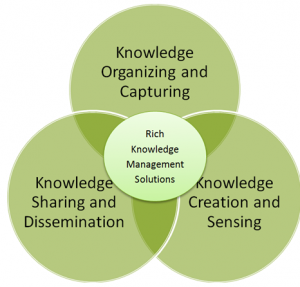
The knowledge management process model developed by Anthon Botha in 2008 examines the interdependent relationship between three knowledge processes. The model proposes that the successful interaction and overlap of these processes leads to rich knowledge management solutions. Like the Gamble and Blackwell model, this approach focuses on the role of management within the knowledge sharing process. Unlike Gamble and Blackwell’s matrix, this model accounts for the creation of new knowledge.
Model Overview
Breaking Down the Model
The first stage of this model deals with the organization and capture of knowledge. This stage is a people-oriented process. That means people (managers) are actively involved in figuring out what knowledge exists within their organization and cataloguing this knowledge in order to make sense and better use of the collective information and data. Like the Gamble and Blackwell model, people organize this information to see how this data can help bridge organizational gaps.
Overlapping with the first stage of this model is the creation and sensing knowledge stage. This stage also has a people focus. That is, people within the organization are aware of the collective knowledge the business possesses and want to build on and enhance this asset by generating new knowledge.
Overlapping with these stages is the dissemination and sharing knowledge stage. This stage involves the technology you will implement to allow people to work collaboratively, share knowledge, and access the information they need.
According to this model, the overlap and proper execution of these three stages will lead to rich knowledge management solutions.
Case Study
Let’s use an example to illustrate this model. Your company would like to enhance an existing service. Under this knowledge management process model, you would start your approach by looking at what you know. What do you know about this existing service? What do your employees know about this service? What are other businesses offering?
From here you would begin creating new knowledge to enhance your service. How would you like to better this service? What could you do to make it better? What do your customers want from this service? What are your employee’s recommendations for enhancing this service? What resources do you have to help you carry out this task? What are other businesses in this industry offering and how do we make our offer more attractive?
Once you have decided how to improve your existing service, you need to share this information with whoever will be impacted by these changes. This includes employees and managers, as well as customers.